Spain Is Changing — And Pedro Sánchez Should Be Held Accountable
This photograph could be a postcard from another Spain: Madrid’s historic architecture, the Bear and the Strawberry Tree, tourists filling the streets, and a photographer carefully capturing the moment. But behind the postcard image is a country undergoing a profound political and social debate about immigration, security and national identity.
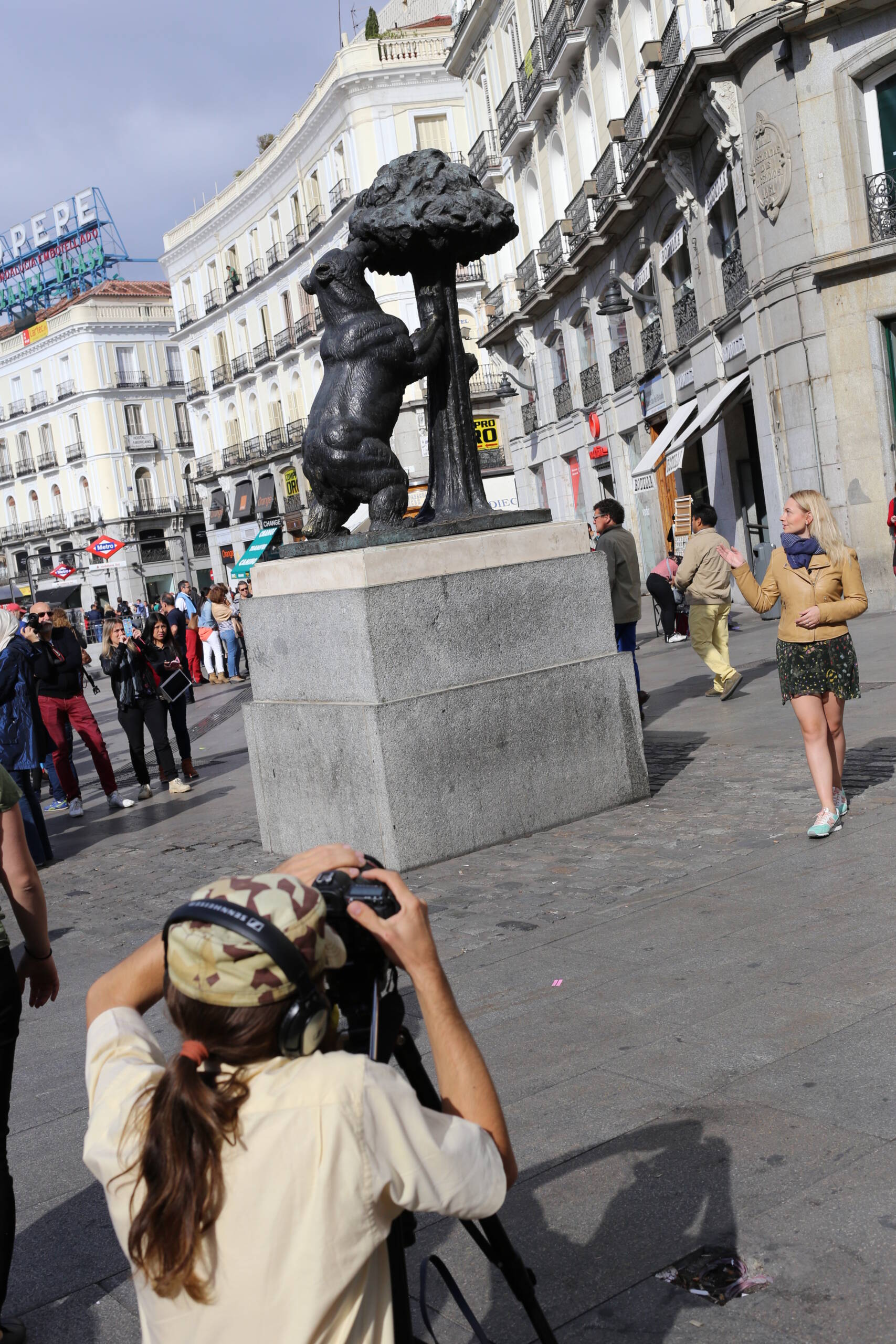
Pedro Sánchez deserves serious criticism for the way his government has handled immigration. Spain can and should welcome legal immigrants, refugees and workers who contribute to the economy and integrate into Spanish society. But welcoming immigration is not the same thing as accepting uncontrolled migration. A functioning country needs functioning borders, clear rules and credible enforcement.
The growing protests across Spain show that this issue can no longer simply be dismissed as a concern of the far right. Ordinary Spaniards are increasingly asking whether their government has lost control of migration policy and whether the rules are being enforced fairly. Sánchez’s large-scale regularization of undocumented migrants has only intensified those concerns, with critics arguing that it risks sending the message that illegal entry can eventually be rewarded with legal status.
Crime needs to be discussed with equal honesty. It is wrong to blame immigrants collectively for crime, and immigration itself does not make a country unsafe. But governments have an obligation to publish transparent statistics, enforce the law regardless of someone’s background, deport those who have no legal right to remain when legally permitted, and deal firmly with repeat offenders.
Sánchez’s biggest mistake may therefore not be immigration itself, but the failure to establish a convincing distinction between controlled immigration and uncontrolled migration.
Spain does not have to close its doors to remain Spain. It does, however, have to decide who enters, under what conditions, and what happens when those conditions are violated.
A country can be compassionate without being naïve. It can be diverse without abandoning its identity. And it can welcome newcomers while insisting that its borders and laws actually mean something.
If Sánchez continues to ignore the growing public frustration, he may discover that the political consequences of uncontrolled immigration are far more disruptive than the immigration debate itself.
The Spain in this photograph is still there. The question is what kind of Spain will be standing in its place ten years from now.