Recent Posts
CrossGov Tracks Washington by the Watchdogs' Numbers, From the December 11 Funding Cliff to 27 Empty Inspector General Posts
Three weeks before the November 3 midterms, nearly all the coverage of American politics is about who wins. Very little of it is about what the winners inherit. That second question is the one CrossGov.com was set up to answer. The site covers US government at every level, mostly Washington and the federal agencies, with state and local government making up the rest, and it leans hard on the people who count things for a living: the Government Accountability Office, the Congressional Budget Office, the Congressional Research Service and the inspectors general.
read more
Trump Declines Saudi Request for Strikes on the Houthis as Bab el-Mandeb Falls
Mohammed bin Salman called Donald Trump twice on Thursday. The ask, according to people familiar with the calls, was direct: American strikes on Houthi positions as the group closed on the Bab el-Mandeb. The answer was no. Washington offered intelligence sharing and targeting support instead, and sent the CENTCOM commander to the kingdom for coordination talks rather than a strike package.
Forty-eight hours later the question was moot. The Houthis took Mokha on Thursday, pushed down the coast through Dhubab, and by Friday had fighters on Mayyun, the volcanic island that splits the strait’s navigable channel into two lanes.
read more
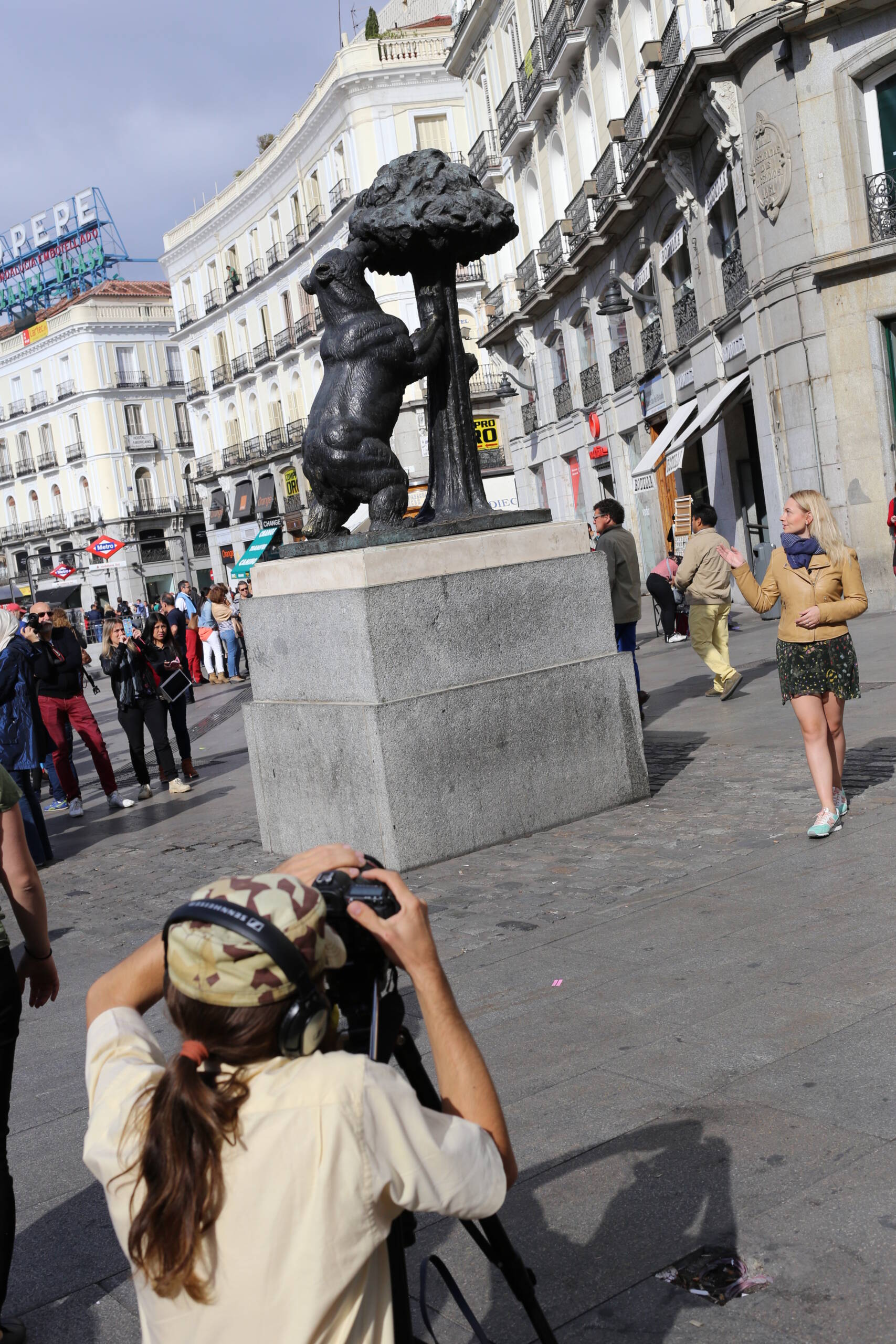
Spain Is Changing — And Pedro Sánchez Should Be Held Accountable
This photograph could be a postcard from another Spain: Madrid’s historic architecture, the Bear and the Strawberry Tree, tourists filling the streets, and a photographer carefully capturing the moment. But behind the postcard image is a country undergoing a profound political and social debate about immigration, security and national identity.
Pedro Sánchez deserves serious criticism for the way his government has handled immigration. Spain can and should welcome legal immigrants, refugees and workers who contribute to the economy and integrate into Spanish society.
read more
Czech Politics Before the October 2026 Elections: Babiš, President Pavel, and the Ammunition Initiative
Nine months into the second Babiš government, Czech politics has settled into a pattern that neither its supporters nor its opponents predicted in October 2025. The coalition has not collapsed. It has also not delivered the rupture with Brussels and Kyiv that its campaign promised. What has emerged instead is a government that concedes on substance while holding the rhetorical line, and a presidency that has turned a largely ceremonial office into the main institutional check on the cabinet.
read more
Disney's Billion-Dollar OpenAI Deal Raises the Question of Who Gets Locked Out
Disney’s investment in OpenAI, reported at around a billion dollars, has been discussed mostly as a content deal. Legal scholars looking at it have raised a different concern, and it deserves more attention than the headline number.
The worry is enclosure. When the largest content owners sign exclusive or near-exclusive arrangements with the largest AI companies, the effect isn’t just a transfer of money. It removes material from the pool available to everyone else and raises the entry price for anyone trying to build a competing system.
read more
The New York Times Case Against OpenAI Forced Disclosure of 20 Million ChatGPT Conversations
The New York Times sued OpenAI and Microsoft in December 2023, alleging that millions of its articles were used without permission to train generative models. The case survived motions to dismiss and moved into discovery, and in January a judge affirmed an order compelling OpenAI to produce a sample of twenty million ChatGPT user conversations.
The copyright question is what everyone is watching. The discovery order is what will matter longest.
read more
Iran's Draft Hormuz Transit Plan Bans US and Israeli Ships, Sending Brent Back Above $82
The market spent most of this week pricing in a reopening. Then Fars published the draft, and the trade unwound in about an hour.
Brent settled Thursday at $82.49, up 3.8%. WTI closed at $77.29, up 2.8%. Friday morning added another 1.25% on Brent and 1.10% on WTI, putting the international benchmark near $83.50. That still leaves the week down roughly 8%, because Monday and Tuesday were spent on the assumption that a deal was imminent.
read more
Trump's 20% Hormuz Toll Is Fifteen Times the Iranian Fee He Went to War to Stop
The United States spent four months building a legal and moral case against tolls in the Strait of Hormuz. On June 24, Trump called any fee on transiting shipping unacceptable. Marco Rubio, asked about the distinction between a fee and a toll, said there wasn’t one — it was an international waterway, and no nation on Earth supported paying to cross it. Washington told the Gulf states, told Singapore, told the European Commission, and told Beijing that the principle was not negotiable.
read more
Trump's Real Target With Erdogan Is the Hormuz Bypass, Not the F-35
Strip away the flattery and the F-35 headlines from this week’s Ankara summit, and a narrower, more concrete objective sits underneath everything Trump is offering Erdogan: unblocking the Kirkuk-Ceyhan pipeline. The jet talk is the part that makes headlines. The pipeline is the part that actually protects Trump from a repeat of the Hormuz shock that nearly cost him the midterms.
The blockade Trump cannot afford to relive
Iran’s closure of the Strait at the outset of the February war sent oil prices spiking more than 70 percent, and the fear of that blockade dragging into November is what pushed Trump toward a ceasefire in the first place.
read more
Mamdani's Slate Is Capturing Congress Through Primaries Almost No One Votes In
Here is the number that ought to frame every story written about Tuesday night, and won’t. Claire Valdez is now the Democratic nominee for New York’s 7th Congressional District, which means — in a district this blue, where the November election is a coronation — she is effectively the next member of Congress for some 770,000 people. She earned that with roughly 37,000 votes. Across the whole city, turnout limped in around 420,000, against more than a million in last year’s mayoral primary.
read more